
What Are eBay Selling Limits, and Do Aged Accounts Skip Them?
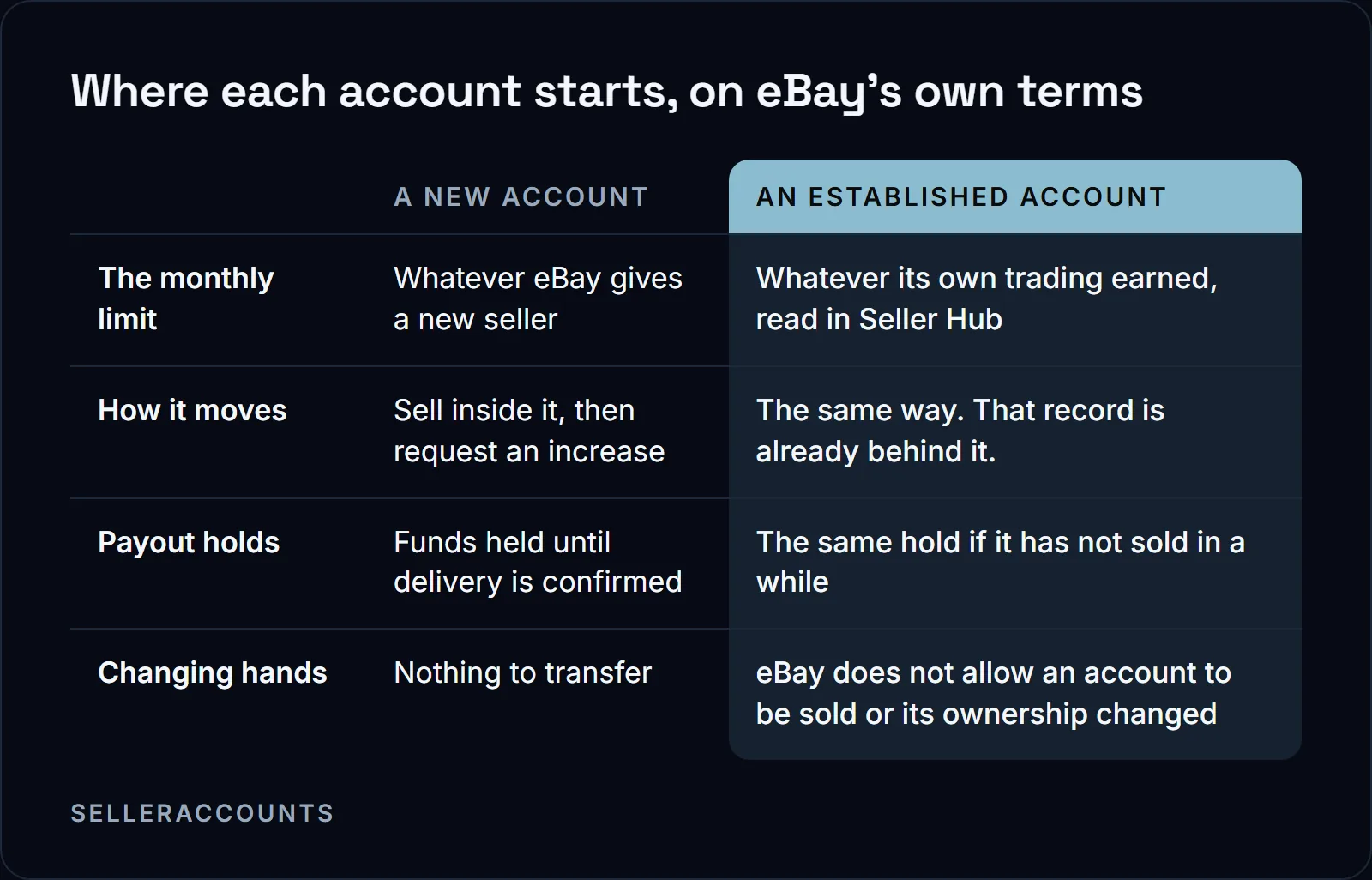
A selling limit is the cap eBay puts on how much one account can list and sell inside a month. Aged accounts do not skip them. eBay ties an increase to your selling performance and sales metrics, so an established account starts with whatever limit its own trading record already earned.
You read that figure in Seller Hub, eBay's dashboard for sellers, on the account itself. What you cannot list this month you can list when the monthly allowance renews.
Why eBay Selling Limits Exist
eBay's selling limits page gives one reason why they exist: the limits are there so a seller grows in a manageable way and keeps buyer service high. eBay raises the limit as a seller gets more comfortable meeting buyer demand, so the cap is tied to what the account has proved it can serve, not to what its owner wants to sell.
eBay's own words:
"Selling limits are designed to help you grow your business in a manageable way and to ensure you can give your buyers great service. As you get more comfortable meeting buyer demand, we’ll increase your limit."
Read that as a throttle rather than a punishment. A marketplace carries the risk of the order that never ships, and a brand new account has nothing on it that says the orders will ship.
Two details catch sellers out, both from the same page. Listings you create above the cap can be pulled: "We may end any listings that you have created over your existing limit. Don't worry: you can list them again when your monthly allowance renews or if you receive an increase in the amount that you can sell." And Good 'Til Cancelled listings, the ones that keep renewing until you end them, are counted too: "Good 'Til Cancelled listings count toward your selling limits; these won't renew automatically if you've reached the maximum amount you can list."
The page is short and worth reading once: eBay's selling limits help page.
Where Do You Find Your Selling Limit?
In Seller Hub, on the account itself. eBay's page says "You can always find your selling limit in Seller Hub" and then walks through the clicks. That is also where eBay tells you to check your selling performance, alongside your Seller Dashboard, which is what an increase is judged on.
How to Increase Your eBay Selling Limits
eBay names one lever and one shortcut. The lever is your own trading:
"If your selling performance and sales metrics are strong, you may be able to have your limits increased."
The request itself sits behind "Request higher selling limits" in the Monthly selling limits section of My eBay's Selling Overview. The shortcut is eBay's own tip:
"If you have more than one seller account, you may also be able to raise your limits by linking to your other, more established seller account."
That is eBay saying an established account's record carries weight.
So why does a request come back as no? eBay names one condition, strong selling performance and sales metrics, so the answer to a refusal is the same as the answer to a low limit: sell inside the cap you have, cleanly, then ask again.
What Happens If You Sell Past Your eBay Selling Limit?
eBay can end the listings you created above the cap, and you relist them when the monthly allowance renews. The heavier risk sits next to the limit rather than inside it: when order volume jumps suddenly, eBay holds the funds on orders that have not been delivered yet.
The money part is eBay's transaction holds page, which says that on unusual selling activity or a sudden increase in order volume, "the funds for a seller's future and not yet delivered orders will be held". A transaction hold, in eBay's words, "may be applied as a one-off for a specific order (for example, a high-priced item), or may apply to all of a seller's orders for a period of time (for example, new sellers or sellers who had a recent suspension)".
The account level version is on the payouts page: "Payouts may be held if we identify unusual activity associated with your account, such as increased customer claims, a sudden change in your selling activity, late deliveries, or negative buyer feedback".
So an account that has traded steadily for years and then runs far above its normal volume does not just look wrong, it gets treated as wrong, and the cash stops while the orders keep shipping. The same page puts an account with no recent selling history on the same footing, holding its funds until delivery is confirmed whatever the registration date says, which is why the eBay account worth buying is one that is selling now and why aged eBay account vs new account is the page to read before you buy a parked one.
Both pages are worth a look before you plan a launch: transaction holds and getting paid for items you've sold.
Where an Aged eBay Account Actually Starts
It is an account by account fact, not a property of age. Nobody can tell you what limit an aged eBay account carries without opening Seller Hub on that account.
Four things are worth comparing between two accounts, and all four sit on the account itself rather than in anyone's sales pitch:
| What to compare | Why it matters | Where you see it |
|---|---|---|
| The current monthly selling limit | It is the ceiling the account carries today | Seller Hub, on the account itself |
| Feedback and completed sales | This is the record the increases were built on | Seller Hub or the Seller Dashboard |
| Seller standing and defects | A raised limit on a damaged account is worth much less | The Seller Dashboard |
| Recent selling activity | An idle account gets held like a new one | The account's recent orders |
Anyone who cannot show you all four on a screen share is showing you a screenshot, not an account.
Is Buying an Aged eBay Account Inside eBay's Rules?
No. eBay's own pages say an account cannot be sold or its ownership changed, and transferring it without eBay's consent is a User Agreement breach. eBay also publishes the consequence: "Attempting to sell an eBay account may result in buying and selling restrictions as well as account suspension or removal."
Both rules are below, one from eBay's help page and one from its User Agreement.
"In the interest of protecting our buyers and sellers, and maintaining a safe marketplace, you can't sell your eBay account or change its ownership."
The User Agreement puts it as a thing you agree not to do:
"transfer your eBay account (including feedback) and user ID to another party without our consent;"
Nobody should call that a loophole. The full answer on what changes hands, what does not, and what we will and will not do, is in can you transfer an eBay account to a new owner.
We sell aged Amazon, Walmart and eBay seller accounts, 1,700+ of them since 2020. Buyers who already run an aged Amazon seller account often add eBay to spread their risk across marketplaces.
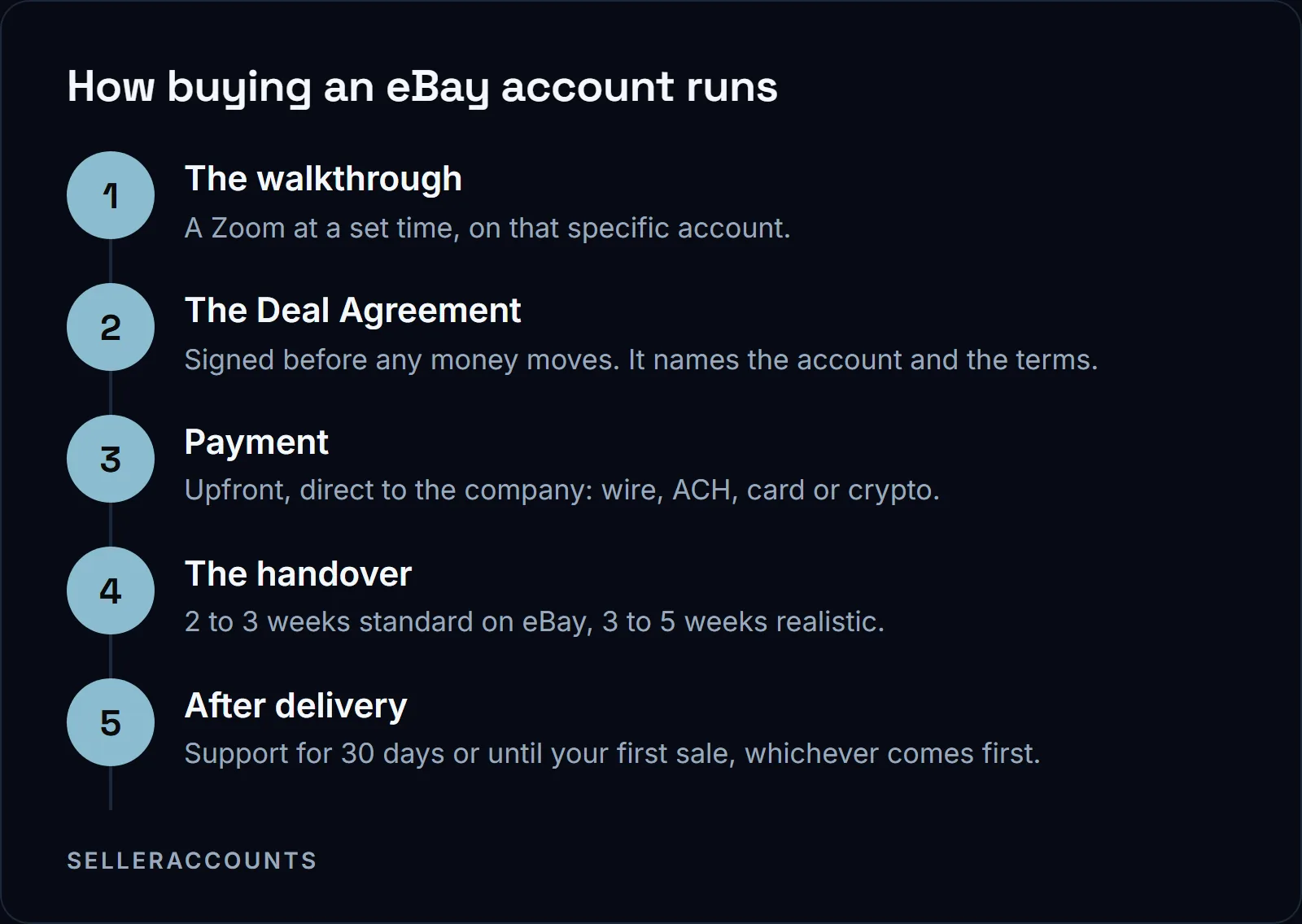
If the ceiling is what is stopping you, start with the live stock on buy an aged eBay seller account. We do not publish prices, and the terms, the payment and the eBay handover timeline are on how buying works.
FAQ
Can I run more than one eBay account?
Yes. eBay publishes a multiple accounts policy and sums it up this way: "We understand that eBay members might want different accounts for buying or selling, or to focus on different product lines." Its selling limits page assumes the same thing, because the tip about raising a limit by linking to a more established account only works if you hold two.
Does an aged eBay account keep its selling limits when it changes hands?
Nobody should promise you that, and we do not. What you can check is what the account carries today, in Seller Hub, on the walkthrough before you sign. Then trade into it at a normal pace, because eBay holds the funds on future and not yet delivered orders when it sees a sudden increase in order volume.
What counts toward your eBay selling limit?
eBay names one thing directly: "Good 'Til Cancelled listings count toward your selling limits; these won't renew automatically if you've reached the maximum amount you can list." Beyond that, the figure your own account is measured against sits in Seller Hub, which is where eBay tells you to look. Check it on the account rather than working from a number someone quoted you.
Do eBay selling limits reset every month?
The allowance is monthly, so a cap you hit in one month is not a permanent ceiling. eBay says listings it ended for being over the limit can go back up "when your monthly allowance renews or if you receive an increase in the amount that you can sell". An increase does the same job sooner.
Related pages
Ready to Scale Your Amazon Business?
Book a free demo call and we'll screen-share real accounts live to find the right match for your business. No screenshots, no guesswork.
Book Your Demo